We Joined the Queue for a Patch of Earth and Grew a Windowsill Instead
There is a particular kind of optimism in filling out a council allotment form. It asks for your name, your address, and whether you would prefer a half plot or a full one. It does not ask whether you have ever kept a fern alive, or whether your idea of gardening is mainly watching other people do it through a fence. We ticked ‘half plot’ and felt terribly sensible.
The woman at the allotment office was kind but clear. The list was long. Not impossible, she said, but long. Three years, give or take. Maybe four. She said it the way you might say a train is delayed: not personal, just weather.
We walked home with the form receipt in Joe’s coat pocket and a plan in ours. We would wait. But we would not wait empty-handed.
The form, the fee, and the friendly warning
What nobody tells you about an allotment waiting list is that it is not a queue in any ordinary sense. It is a rumour with a spreadsheet attached. You join, you forget, you remember in the middle of a supermarket queue, and then you ring the council again to check you are still on it. You are. You are number forty-seven. You are congratulated on being number forty-seven as though it were a promotion.
Our first reaction was to be very grown-up about it. We read articles about soil health. We watched a man on the internet explain double digging while standing in a field in Leicestershire. We bought a notebook with a graph-paper cover and wrote ‘PLOT PLAN’ on the first page, despite having no plot and no idea where north was.
The notebook is still mostly empty. The windowsill, however, is not.
A windowsill becomes a smallholding
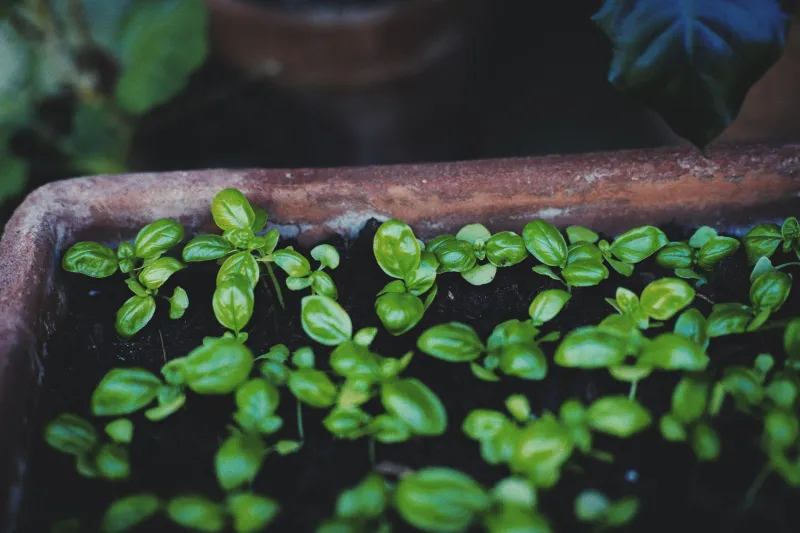
It started with a supermarket basil plant that was already halfway to compost. Holly rescued it, repotted it into an old tin with a hole punched in the bottom, and placed it on the kitchen sill with the solemnity of someone installing a museum exhibit. It survived. Then it flourished. Then we bought another one, and a rosemary, and a packet of chives that promised ‘easy wins’ on CBeebies-level confidence.
By midsummer, the sill had a queue of its own: three pots of mint, a parsley that looked permanently startled, and a chilli plant that produced exactly one chilli. We named it Kevin. Kevin was not a success in the traditional sense, but he was ours.
The real turning point was the grow bag. A neighbour on our street, Denise, was clearing out her shed and offered us two borrowed grow bags, a bag of compost, and a small trowel with a wobbly handle. ‘If you’re waiting for a plot,’ she said, ‘you might as well be waiting productively.’
We planted salad leaves in one bag and three potatoes in the other, which we later learned is a bit like putting three people in a phone box. They grew anyway. Not enough for a Sunday roast, but enough for a very small, very proud bowl of new potatoes with butter and far too much salt.
Borrowed grow bags and the politics of a fence
There is a whole etiquette to borrowing garden things. You must return them cleaner than you found them, unless it is a trowel, in which case you return it with a little soil on it so the owner knows it has been used properly. You must not return a grow bag full of weeds. You must absolutely not return a borrowed flask without washing it, which we did once and have not been allowed to forget.
Our back fence became a kind of low-security border post. On one side, our neighbour Graham grows runner beans with military precision. On the other, a family with two small children grow sunflowers that lean over the fence like curious giraffes. We swapped a handful of our mint for a bag of Graham’s beans in July, and he pretended not to notice that our mint had taken over the entire pot.
That swap was the first time the waiting list felt less like a delay and more like a strange, slow introduction to a community. Not the allotment community exactly—we are still on the outside of that particular gate—but the wider one. The one where people leave courgettes on your doorstep with a note that says ‘please take these, we are drowning’.
The swap economy
Since then, we have become enthusiastic participants in what we call the fence economy. It runs on goodwill and slightly uneven quantities. A jar of our windowsill chutney (too sweet, but generous) for a punnet of someone’s raspberries. A spare rosemary cutting for a bag of apples from a tree that nobody knows the name of. A promise to water next door’s pots while they are away, in exchange for first refusal on their rhubarb.
None of this is the same as having a plot. We know that. We are not pretending our kitchen sill is a market garden. But there is something quietly lovely about tending something—anything—while you wait for the bigger thing. It keeps your hands busy. It makes you look at the weather differently. It gives you a reason to say ‘ooh, the light’s nice’ in the middle of washing up.
What waiting actually teaches you
The allotment waiting list has taught us patience, but not the noble, meditative kind. More the ‘checking your emails for a council update and finding only a newsletter about bin collections’ kind. It has taught us that ‘three years’ is a flexible concept. It has taught us that a windowsill can hold more ambition than you might think, and that a borrowed grow bag can feel like a field if you squint.
It has also taught us to lower our expectations in a useful way. We will not be self-sufficient. We will not be entering the village show with a giant marrow. We will, however, be the couple who can offer you a slightly limp basil leaf and a story about Kevin the chilli.
As November settles in and the windowsill gets less dramatic—the basil is sulking, the mint is sleeping—we are still on the list. Number forty-something. We have stopped checking.
But we have not stopped growing. There is a new pot of winter herbs by the kettle, a bag of seed packets in the drawer, and a notebook with ‘PLOT PLAN’ on the front that is still mostly empty. One day it will be full. Until then, the waiting is part of the adventure. And the kettle is always on.