The Interval Is the Point: Why We Keep Going Back to the Village Hall Film Night
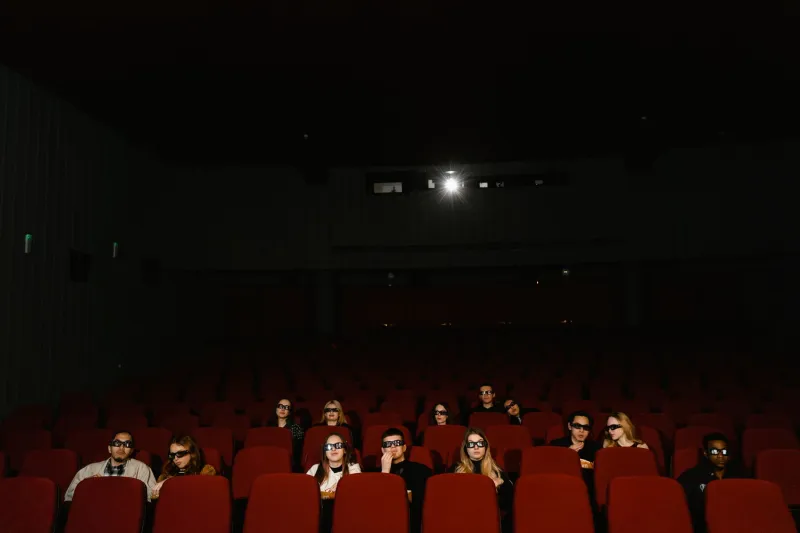
There is a particular sound a village hall makes when it is filling up for film night. Not the hush of a cinema, exactly. More a shuffled, clinking, hello-at-the-door sort of noise: folding chairs being dragged across parquet, a flask lid being unscrewed, someone asking whether the radiator near the stage is actually on or just pretending. We first went because it was four pounds and we had nothing better to do on a wet Thursday. We have kept going because it turns out we had quite a lot better to do, and this was it.
Four Pounds, Cash Only, No Booking Fee
The film itself is rarely the point, though it helps if it is good. The first time we went, the choice was a black-and-white comedy from the 1950s that neither of us had heard of. Holly spent the first ten minutes whispering guesses about the plot. Joe spent them trying to work out whether the projector was going to make it to the end. It did, but only after a man called Brian walked to the back of the hall and gave the machine what can only be described as an encouraging tap. The picture flickered, settled, and the room gave a small round of applause. You do not get that at the multiplex.
The economics are simple and slightly absurd. Four pounds each. A raffle ticket for a pound. Tea or coffee at the interval for fifty pence, served from an urn that has clearly seen things. Last month the raffle prize was a box of shortbread and a bottle of something red. The month before, it was a crossword book and a bag of satsumas. Nobody minds. The point is not the prize. The point is that everyone leans forward slightly when the numbers are called, and someone always says 'ooh' in a way that makes the whole room feel warmer.
The Interval Is the Real Event
At a multiplex, the interval has been abolished. You are expected to sit in the dark, pay eleven pounds for a paper cone of nachos and not speak until the credits. At the village hall, the interval is the main event. The lights go up, the urn is opened, and the room reorganises itself into small clusters of conversation. We have learned that the woman who sells the raffle tickets has a grandson in Leeds. We have learned that the man in the corduroy jacket once drove a bus through the night from London to Manchester and has opinions about service stations. We have learned that the hall committee is still arguing about the kitchen fund.
None of this is on a screen. All of it is why we go back. There is a lovely, old-fashioned democracy to a village hall film night. Nobody is trying to sell you an upgraded seat. Nobody minds if you bring your own biscuits. The chairs are mismatched, the heating is either off or tropical, and the screen has a small crease down one side that we have all agreed to ignore. It is not a night out in the polished sense. It is a night in, collectively, with a film on the wall.
How to Find One Near You This Winter
They are not always well advertised. That is part of the charm and part of the frustration. Start with the obvious places: parish noticeboards, the free newspaper that comes through the door, the window of the post office, the village hall website that looks like it was last updated in 2012 but is somehow still accurate. Ask at the library. Ask in the chip shop. Someone will know someone who runs one.
Look for phrases like 'film club', 'community cinema', 'supper and a screening', or 'doors open at seven for seven-thirty'. Many are monthly, often on a Friday or Saturday. Some are run by volunteers, some by a local arts group, and some are held to raise money for the roof. Take cash. Take a mug if you are fussy about tea. Take a jumper, because the heating is a coin toss.
The Multiplex Can Keep Its Reclining Seats
We still go to the cinema sometimes. We like the big screen and the proper sound and the feeling of being somewhere anonymous for two hours. But the village hall film night does something the multiplex cannot. It makes a small, ordinary evening feel like it belongs to us. We walk home afterwards in the cold, arguing about the film and eating the raffle shortbread, and the week feels less grey than it did at six o'clock.
So this winter, if you see a handwritten poster for a film night in a hall you have never been inside, give it a go. Take four pounds. Take a friend. Clap when the projector stutters. Buy a raffle ticket you will not win. The film might be a masterpiece or it might be something with a crease down the middle. Either way, the interval will be worth it.