Stallholders in Winter Coats: The Saturday Our Market Learned to Come Inside
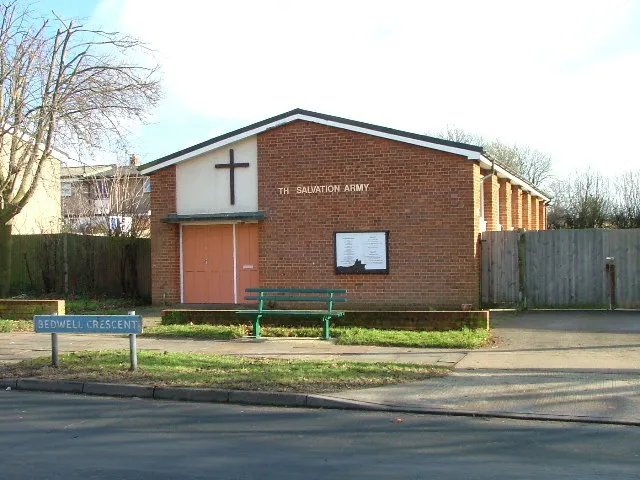
Photo: Robin Hall, CC BY-SA 2.0, via Wikimedia Commons
There is a particular Saturday in November when our outdoor market stops pretending. The awnings go up anyway, the traders stamp their feet, and someone always says it is not that cold really. Then, quietly, by the following week, half the stalls have disappeared into the church hall across the road. It is not a grand event. Nobody cuts a ribbon. But it changes the shape of the morning, and this year we decided to follow the move properly.
We are Holly and Joe, and our Saturday routine is not especially adventurous. We buy bread, we argue gently about whether we need more cheese, and we come home with a paper bag of something we did not plan for. But when the market migrates indoors, the routine becomes a little more interesting. The church hall has its own smell of dust and floor polish and tea urn. The light is yellow. The acoustics are strange. And the stallholders, who spend the summer shouting over the wind, suddenly have to learn to talk at indoor volume.
The First Van at Quarter Past Seven
We arrived early, which is not our natural state. The first van was already backed up to the hall doors, and a man in a fleece was carrying folding tables as if they were light. Inside, the caretaker was putting out cones and a handwritten sign that said, rather hopefully, please keep fire exit clear. A kettle was clicking itself on in the little kitchen.
This is the bit nobody sees. The market does not simply appear. It is lifted, carried, negotiated and rearranged by people who have been doing it for years. We stood by the noticeboard with our flask and tried not to get in the way.
Pauline and the Cheese That Prefers the Cold
Pauline has the cheese stall. In summer she is near the war memorial, with a blue cloth and a windbreak made from an old sheet. In winter she is just inside the hall doors, where the draught still finds her but the rain does not. She was unwrapping a large wedge of something pale and crumbly when we said hello.
She told us the move indoors is not about comfort. It is about the cheese. A wet Saturday is bad for labels, bad for paper, bad for the general mood of a stall. The hall is dry, and dry is most of the battle. She has a hot water bottle under the counter and a small radio that she keeps very low. She knows most customers by their usual order rather than their names, though she is pleased when the two line up.
We bought a piece of something she recommended for a baked cauliflower, and she wrote the name on the paper in biro. It felt like a small winter ritual: the hall, the handwriting, the promise of something warm for dinner.
Dev's Bulbs and the Business of Hope
Dev sells plants, and in November his stall becomes mostly bulbs. In the summer he has tomatoes and herbs and the occasional dramatic fern. Now he has paper bags of tulips and daffodils, and a tray of hyacinths that look like small brown onions with ambition.
He had been given the spot under the high window, which sounds good until you realise the window is single-glazed and the radiator is on the other side of the room. He does not complain. He simply arranges the bulbs in rows and tells anyone who stops that winter is not the end of the garden. It is the planning bit.
A woman in a raincoat asked whether it was too late to plant. Dev said no, not if you get them in soon, and not if you are prepared to accept that the squirrels will have opinions. She laughed and bought two bags. He wrote the variety on each bag with a pencil, and we noticed he did this for everyone. It is a tiny service, but it turns a purchase into a promise. We left with a bag of tulips and a vague plan for the front border.
Rob's Books and the Ladder of Small Talk
Rob has the second-hand book and tool stall. In summer he is at the far end, near the busker who plays the same three songs. In winter he is beside the radiator, which he describes as the best pitch in the hall and also the worst, because people stand there to get warm and forget to buy anything.
He was rearranging a box of old paperbacks and a set of screwdrivers that looked older than both of us. He said the indoor market has a different rhythm. Outdoors, people walk past quickly. Indoors, they linger. They read the first page. They tell you about a book they had as a child. One man spent ten minutes explaining the plot of a thriller he had not enjoyed in 1998, and Rob sold him a completely different thriller for two pounds.
We bought a small book about local walks and a wooden ruler for no reason at all. Rob put them in a paper bag and said, see you next week. It was not a grand statement. It was just true.
The New Route Home
By the time we left, the hall was full and the windows had steamed up. We had cheese, tulips, a book and a ruler. The obvious thing was to walk straight home. Instead, we took the detour behind the leisure centre, along the path that follows the old railway line. We would never normally go that way in summer. It feels too much like a shortcut to nowhere.
In November, though, it is perfect. The trees are bare enough to see the backs of houses, and someone has planted snowdrops in a strip of earth by the fence. We drank the rest of the flask coffee on a bench and watched a dog refuse to walk in a straight line. It turned a quick shop into a proper Saturday, which is the whole point.
Why the Move Matters
The market moving indoors is not a dramatic story. It is tables and vans and a kettle. But it is also the reason our town still has a Saturday. The stallholders adapt, the church hall opens its doors, and the rest of us follow the steam and the yellow light. If you have a market near you that shifts under cover for winter, go and find it. Take a flask. Buy something small. And take the long way home.