The Saturday Shelf of Surprises: A Year of Library Reservations and Accidental Reading
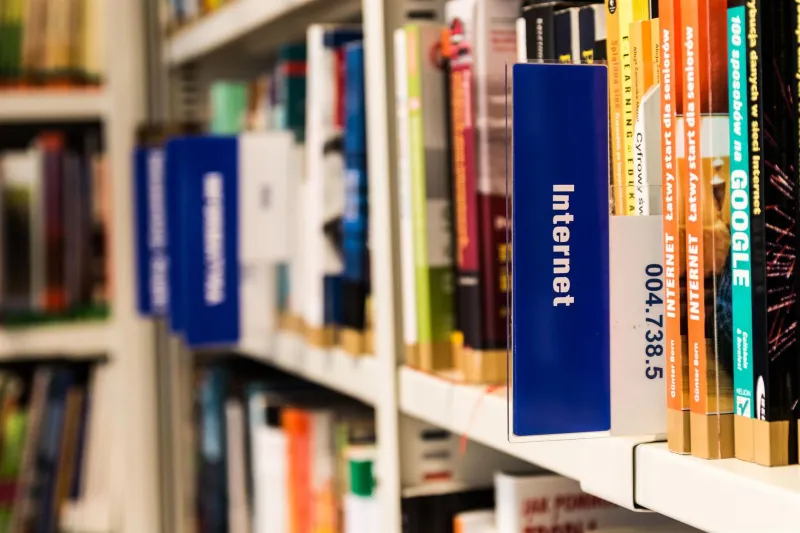
Saturday begins with a flask and a small act of faith. We walk into town just after nine, past the bakery queue and the bloke washing the café windows, and head for the library. The hold shelf is near the door: a run of pale wooden cubbies with laminated slips poking out like little flags. Somewhere in there is a book with our name on it. We usually have no idea what it will be.
That is the whole system, really. During the week, one of us will be scrolling on the sofa or half-listening to the radio and think, I fancy reading about that. A click, a reservation, a small fee where it applies. Then we forget about it. By Saturday, the hold shelf has become a lucky dip. We collect the stack together, sit by the window, and work out what on earth we have let ourselves in for.
The shelf by the door
Our library is not grand. It has a low ceiling, a radiator that clanks, and a noticeboard advertising a bereavement group, a tabletop sale and a lost cat called Bernard. The staff know us by our Saturday faces. There is always a jigsaw on the go near the children's section, usually with one piece missing and a note apologising for it. The hold shelf is the best bit. It is where the town's random reading habits gather in elastic bands.
We started reserving books on a whim a few years ago, mostly because we kept reading the same sort of thing. A crime novel each, a history book, a cookbook we would flick through and return. It was fine, but it was a bit like ordering the same takeaway every Friday. So we made a loose pact: reserve what catches your eye, collect it together, and give it at least a chapter before deciding it is not for us. No spreadsheets. No reading goals. Just a Saturday morning shelf of surprises.
Twelve books, twelve small detours
Over the past year, twelve books came home with us. Not all of them were finished. One was returned after forty pages with a sigh. But each one nudged us somewhere we would not have gone on our own.
There was a slim memoir about drystone walling, which Joe reserved after seeing a wall on a walk and wondering who built it. We learned that a well-made wall is mostly air and patience. Holly borrowed a novel with a lighthouse on the cover and no idea what it was about; it turned out to be slow, salty and quietly brilliant. A book about fungi changed our autumn walks, because we started noticing what was under our feet rather than just what was on the horizon.
Then came a 1970s cookery book, all brown photographs and instructions to use a gill of something. We made one recipe, laughed at another, and kept it for a fortnight. A poetry pamphlet arrived because Holly liked the cover. We read it aloud in the kitchen on a wet Tuesday, which is not something we usually do. A travelogue about the Fens made us want to drive east just to see all that flatness for ourselves.
One of us reserved a children's book by mistake — or so we thought. It was funny and strange and took twenty minutes to read. A local history booklet taught us about a railway line that used to run through the edge of town. A science fiction novel confused us both, but we argued about it happily for a whole evening. A garden book gave us unrealistic ideas about windowsill herbs. An essay collection had us nodding at one page and rolling our eyes at the next. And a thriller, reserved on a Friday night impulse, was finished by Sunday lunch.
What the lottery taught us
The first thing we learned is that curiosity does not need a plan. It needs a small prompt and a bit of shelf space. Reserving a book is a tiny promise to your future self: you will have something new to think about soon. Even if the book turns out to be a dud, the promise still does something nice to the week.
The second thing is patience. Library books come when they come. Someone else is reading them, or the van is late, or the reservation system is having a moment. You cannot hurry a hold shelf. We have got better at waiting, and better at reading whatever is in front of us rather than whatever we thought we wanted.
The third thing is that not finishing a book is allowed. This sounds obvious, but it took us a while. If a borrowed book is not working after a fair go, we return it and say so. The library does not mind. The book does not mind. It frees you up to be curious again.
The rules we have settled on
We have a few gentle rules now. We try not to reserve more than three books at once, because a pile becomes a chore. We collect them on Saturday morning and read the first chapter together over coffee, mostly to see which one grabs us. We keep a scrap of paper in the kitchen with the return dates on it, because fines are a dull way to end a nice experiment. And we never look up the plot before we start. The cover and the blurb are enough.
Why we will keep pressing reserve
The hold shelf is a small, ordinary thing. It sits by the door in a building that smells of paper, floor polish and the occasional biscuit. But it has become one of our favourite Saturday rituals. It is a lottery with no losers, a lucky dip with a due date. You put in a request when you are curious, then let the week carry it along until a stranger hands you something you would never have picked yourself.
This year, the twelve books gave us walling, fungi, flat landscapes, bad 1970s recipes and one very good thriller. Next year, who knows. We will keep pressing reserve. We will keep walking to the shelf by the door. And we will keep trusting that a stack of maybes is a fine way to spend a Saturday morning.