Boot Sale Arithmetic: Twelve Months of Mud, Flask Coffee and the Three-Pound Rule
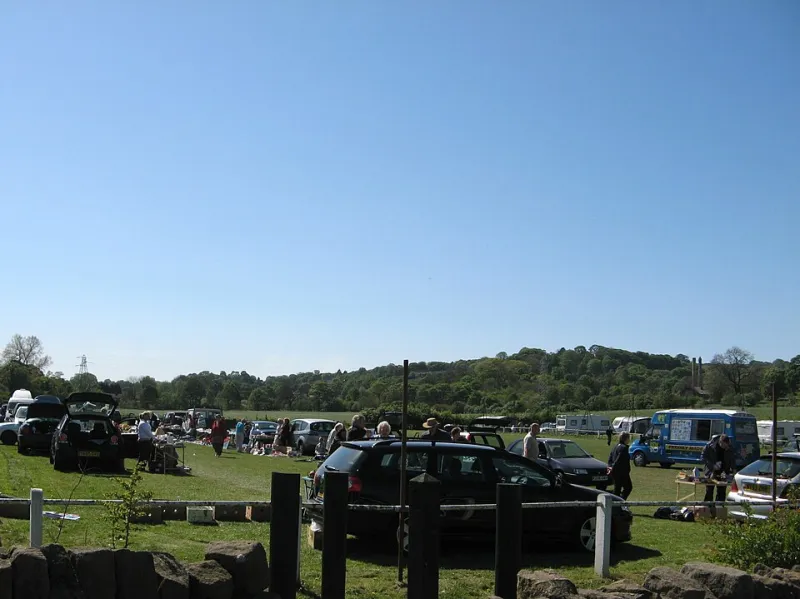
Photo: Stephen Armstrong , CC BY-SA 2.0, via Wikimedia Commons
There are two sorts of people on a Sunday morning in March. One lot are still asleep, curtains shut, phone on silent. The other lot are standing in a field holding a flask, wearing the wrong shoes, and quietly thrilled about it.
We became the second lot this year. Not as a one-off — as an actual habit. A proper, deliberate, all-twelve-months car boot year. We assumed it would fizzle out by June. It didn't. It got worse, in the best way.
It begins with a flooded field
Our first outing of the year was a washout. Not a gentle drizzle — proper standing water, the kind that finds the seam of your boot within ninety seconds. We paid our entry, walked in, spent four pounds on a wicker basket and a spare cafetière, and left inside forty minutes, delighted.
That's the first thing nobody tells you about car booting. The weather is not the point. The point is that you went. Mud is part of the ritual, like the smell of a church hall or the specific noise a trestle table makes when someone folds it up at midday.
The glovebox fund
Our best decision of the year was small and boring: we started keeping cash in the car. Two tenners folded into the flap where the manual lives, plus a little bag of pound coins and fifty-pences.
Sellers are patient, but not that patient. The number of stalls we watched lose a sale while the buyer waved a phone around looking for a signal in a field is genuinely upsetting. Cash is faster, cash gets you the deal, and cash in the glovebox means you never have to find a working cashpoint in a village that closed its bank in 2019.
It also means you can set a limit. Ours is thirty pounds for the day, and when the notes are gone, they're gone. We've never once regretted coming home with money in our pocket.
The bag question
We've tried them all. The wheeled trolley is a lovely idea and a nightmare on wet grass. A designer tote is a mistake twice over — once for your shoulder, once for the mud. The winner, by a country mile, is an ugly, heavy-duty woven bag with handles long enough to go over your shoulder, plus two of those fold-flat bags that live in the boot permanently.
Oh, and a canvas bag inside a canvas bag. This is the kind of thing you only learn by carrying a large ceramic pot half a mile across a field in the rain.
The early-start argument
We are not, and will never be, dawn people. We know the folklore: the good stuff goes by seven, the dealers do the rounds, all that. Some of it is true. But we've done the maths across the year, and our best finds have almost all come between nine and eleven.
The early hours are for furniture, tools and anything that needs a van. The later hours are for the good-natured haggling of people who want to go home. Around half ten you get the folding-up discount, and around eleven you get the bit we've come to love most, which is a stranger saying "take the lot for two quid" about a cardboard box you haven't even looked inside.
So our honest advice: go early if you're hunting something specific. Go late if you're hunting a nice morning out.
Car park etiquette, which is really just manners
- Park as though a hatchback will need to reverse out of the space beside you, because one will.
- Don't block the burger van. It is the closest thing this field has to an emergency service.
- Ask before picking up. It costs nothing and the answer is almost always a cheerful yes.
- Don't narrate what you think something is worth within earshot of the person selling it. We've seen it. Don't be them.
- Watch where you walk backwards. Trestle table legs are silent and unforgiving.
The £3 rule
This is the one we've kept all year without breaking it. If something costs three pounds or less and you can't immediately think of a reason not to, buy it. Three pounds is the price of a coffee you'd drink standing up. It is not a commitment, it's a bet.
The best things in our house came in under that line. A small green jug with a chip in the rim, now full of pens. A tin of mismatched cutlery that turned out to have a decent pair of scissors in it. A folding wooden ruler. Two heavy glass tumblers that have survived a year of dishwashers and are now the only ones we actually reach for.
Over three pounds, we think about it and do a lap. Under three pounds, we cheerfully throw the dice. The rule has cost us maybe forty pounds across the year and furnished half a kitchen.
What stayed, what went
The honest answer is that about a third of what came home went back out again — to charity shops, to a neighbour's stall, into the loft. We're fine with that. The pleasure of a car boot is not acquisition, it's the two minutes of imagining what you'd do with something.
What stayed stayed because it did a job. The wicker basket holds the logs. The cafetière is still on the shelf, still slightly scratched. A huge pottery bowl that cost four pounds doing the washing-up of tiny things in the garden.
The frosty finale
Our last sale of the year was the first Sunday in December, four degrees, breath visible, the field hard as a car park. Half the usual stalls had stayed in bed. We bought a tin of Christmas biscuits for eighty pence, two pairs of woolly gloves for a pound, and drank the last of the flask while someone dismantled a gazebo behind us.
We drove home with the heater on and nothing important in the back. That's the whole thing, really. A car boot sale won't change your life. It will give you a Sunday, a decent walk, and a three-pound jug that somehow ends up mattering.