Pinboard Archaeology: What a Wet Afternoon at a Village Hall Taught Us About a Town
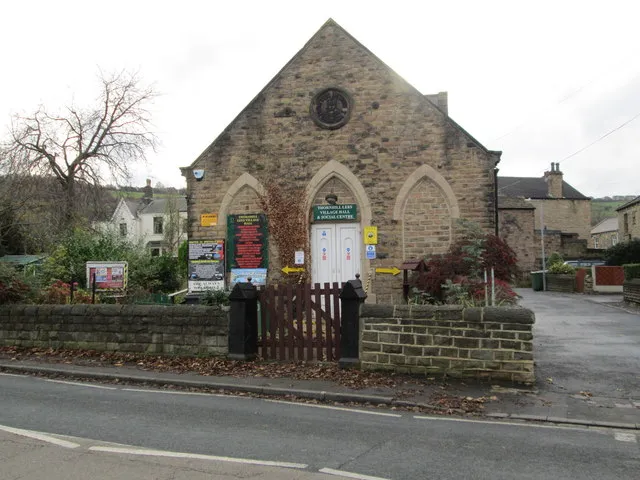
Photo: Betty Longbottom , CC BY-SA 2.0, via Wikimedia Commons
We only went in because of the rain. It was one of those afternoons where the sky goes a flat, unarguable grey and the car park has that wet-tarmac shine. We were somewhere in the Yorkshire Dales, we had an hour to kill before a table was free at the pub, and the village hall had a sign saying COFFEE, CAKE AND A WARM welcome — the last part in a different, more hopeful pen.
Reader, we went in. And I have not stopped thinking about the noticeboard since.
The board is the biography
A high street tells you what a town wants you to think of it. Refurbished bakery, a gift shop with a nice font, a bench with a plaque. Lovely, all of it. But a noticeboard tells you what people actually do on a Tuesday night.
This one was six panels deep and absolutely rammed. A pilates class in the back room, Tuesdays, bring your own mat. A tai chi group, Wednesday mornings, beginners welcome and — this is the detail I keep coming back to — a little pencil addition underneath reading do not be put off by the age of the rest of us, in someone else's handwriting.
There was a badminton club looking for a fourth player. There was a poster for a book swap with a tear-off strip phone number that had been torn off so many times, only the '07' remained, like a job lot of lost causes. There was a laminated sign, clearly from a previous hall committee, saying ABSOLUTELY NO BALL GAMES inside, with the word ABSOLUTELY added later in biro by someone who had reached the end of their tether in about 2019.
Joe stood in front of it for eleven minutes. I timed him. He does not look like a man who reads noticeboards. He looks like a man who reads road atlases, but the truth is he is a total sucker for a handwritten appeal.
The coffee morning economy
Here is my theory, which I now test in every new place we visit. The strength of a village hall noticeboard is a pretty reliable index of something you cannot see from outside: how much unpaid, unglamorous optimism a town has going spare.
Lots of freshly dated notices, in June's handwriting, for things with no commercial point? That town has an immune system. Somebody there will bring a flask to a stranger's funeral.
A board with three faded posters from 2023 and a fire drill notice? That town might be lovely and busy and perfectly happy — but it is also possibly running on empty, and the hall knows it.
And then there is the third sort: a board so bursting that notices overlap and crowd each other out, a scrapbook of a place that cannot help itself. That's the jackpot. That's a town where you can turn up with nothing and in a fortnight someone will ask you to hold the ladder.
The cats, the gazebos, the appeals
The lost cat section deserves its own paragraph, because it is always the emotional core. There was a photocopied photo of a cat called Malcolm who had been gone two days, with the words PLEASE CHECK YOUR SHEDS scrawled across the bottom. Somebody else had helpfully drawn a small arrow to a phone number that had already been circled twice.
I hope Malcolm came home. I think about him more often than is reasonable.
Mixed in among the cats is the lost-property economy of Britain: a single brown glove looking for its partner, a marked key with no address, one unattended tent pole. And the borrow-and-lend economy, which is where the real documentary gold is. Can anyone lend a gazebo for the fete on the 14th. Does anyone have the holdall of bunting. Seeking: a long table, four chairs, and someone who is good with wires.
If you want to know whether a town has a functioning community, count the number of things people are prepared to ask a stranger for.
How to read one properly
A few rules we now follow, offered in the spirit of the amateur archaeologist rather than the expert.
- Read the dates first. Notices are archaeology layers. Fresh fliers pinned on top are the present tense; underneath, there are things curling at the corners that couldn't be more finished if they tried.
- Look at the pen. Printed posters tell you someone has a laminator. Handwritten ones tell you someone has no laminator and did it anyway.
- Check the children's column. Playgroup, choir, summer fête, muddy boots. If a town's board has nothing for small people, that is information.
- Find the offers, not just the adverts. Free to a good home. Help wanted. Lifts shared. Those little acts of generosity are the tell.
- Never touch the tear-offs unless you genuinely intend to ring the number. There is a special place in hell for people who take a strip out of curiosity.
The etiquette bit
Go in, buy a coffee, put the money in the tin, say yes to the raffle. That is the whole entry fee and it is about four pounds. Do not photograph the handwritten bits with a phone pointed at close range like you are documenting a crime scene, and do not, under any circumstances, announce to the room that it is so quaint.
It isn't quaint. It's just the bit of public life that hasn't been optimised yet. Twenty years from now, someone will be writing teary essays about how much they miss it.
What we do now
Our days out have changed shape. We used to head for the high street, find the best coffee, walk a loop, go home. Now we park slightly further out, find the hall, and read the board before we decide anything.
It has taken us to a choir rehearsal that was actually a rehearsal and also, apparently, an open rehearsal. It has sent us to a community garden we would never have found on any list. It has put us in a room full of people who have lived within three streets of each other for thirty years and still post leaflets to each other.
And it has made us realise something slightly soppy but true: the best day out is not the one where you see the most, it's the one where you get a glimpse of how a place holds itself together. That's rarely on a brown sign.
Next time it rains on your Sunday, go in. Put a pound in the raffle. Read the pen marks. You will come out knowing more about the town than the tourist board could tell you in a whole website.